
COLORADO SPRINGS, Colo. - Sustainability in archery is often measured in arrows shot, podium finishes earned, or programs launched. But the deeper measure is continuity - whether the sport will be stronger, more accessible, and more resilient 10 years from now than it is today.
For Women’s History Month 2026, under the theme Leading the Change: Women Shaping a Sustainable Future, USA Archery’s story is not only about achievement. It is about women building systems that last - on the shooting line, in coaching ranks, in boardrooms, and at community ranges across the country.
Sustainability is not abstract here. It is visible in participation numbers. It is present in mentorship. It is evident in how opportunity has expanded from one generation to the next.
And increasingly, women are leading that change.
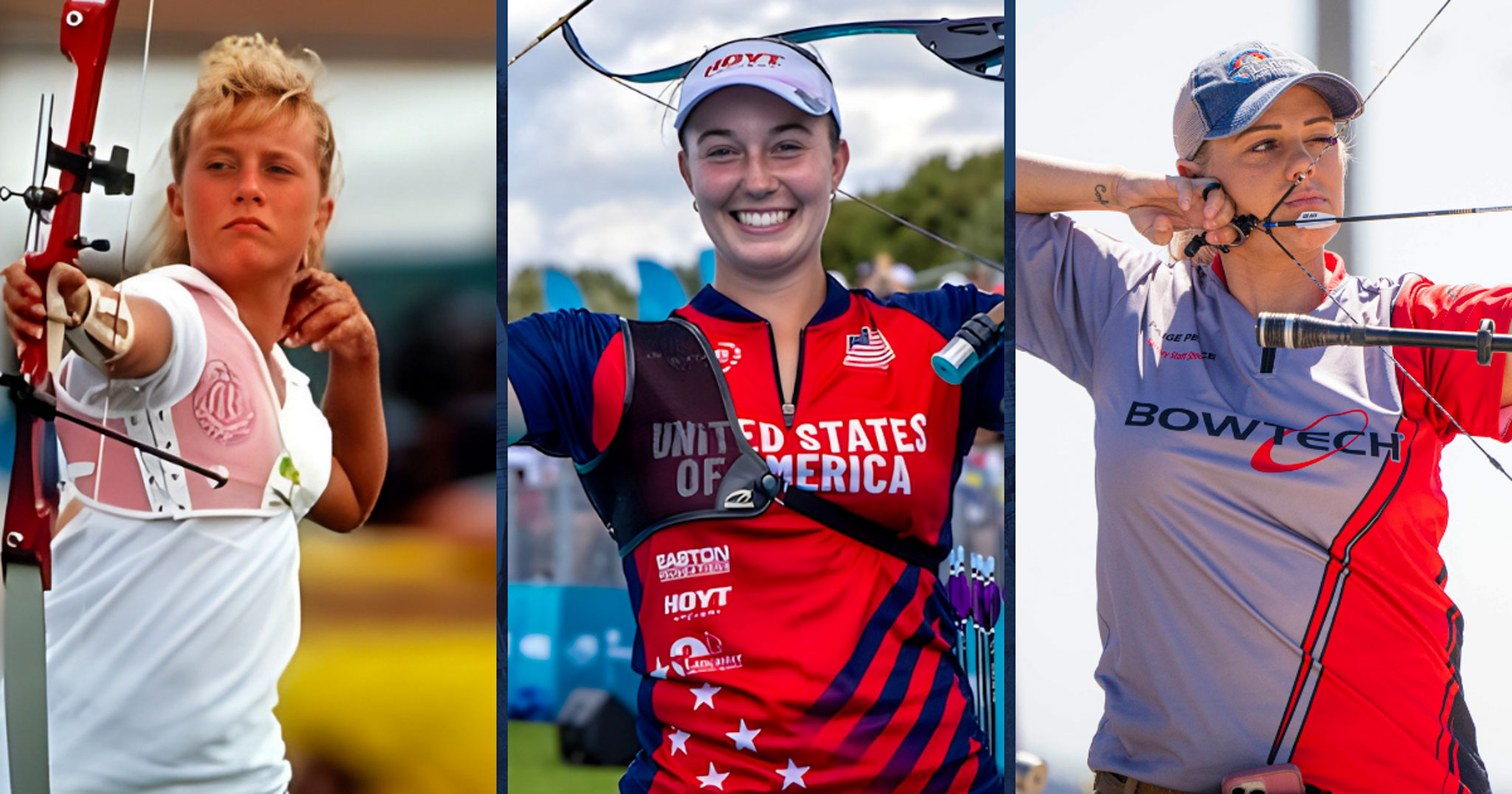
When Denise Parker (above left) stepped onto the Olympic stage in 1988 at just 14 years old, she was not talking about sustainability. She was competing.
But moments like hers create something enduring. Representation at that level does more than inspire - it normalizes. It alters expectation. It lays groundwork.
At the time, development pathways were still maturing. Support systems were narrower. Visibility for female athletes was limited compared to today.
Yet each performance strengthened the case for investment and inclusion. Over time, that momentum shaped the infrastructure young athletes now inherit.
Sustainability begins with access - and access begins with belief.
Today’s elite American women compete in an environment built for progression.
On her home range in Pennsylvania, Casey Kaufhold (above center) trains within a fully developed high-performance system. Data analysis, mental performance strategies, strength programming and international exposure are integrated parts of preparation.
Her rise is not accidental. It reflects a structure designed to support long-term athlete development.
Similarly, in compound, Paige Pearce (above right) has demonstrated what sustained excellence looks like. Her career underscores another pillar of sustainability: consistency.
When elite athletes remain competitive across seasons and cycles, they provide stability to the sport’s competitive identity.
But perhaps the most important shift is cultural. Young women entering USA Archery programs no longer wonder if world podiums are realistic. They see proof.
Expectation is powerful. It sustains ambition.
A sustainable future depends on participation at the base.
Across the country, JOAD programs reflect steady female engagement. Girls are not only joining but they are also staying through key developmental years. Retention matters. It creates deeper experience pools, stronger collegiate programs, and more informed future coaches.
Sustainability also appears in mentorship within these programs. Older athletes help younger ones set up equipment. High school archers assist with beginner clinics. Leadership skills develop alongside shooting form.
Those interactions build more than competitors. They build community.
Change that lasts requires more than talent - it requires governance, funding and strategic vision.
Women are increasingly shaping those areas within USA Archery. Through coaching certification pathways, board service, and philanthropic leadership connected to organizations such as the USA Archery Foundation, women are influencing how resources are allocated and how long-term priorities are defined.
Sustainable growth demands thoughtful investment:
These are not short-term wins. They are long-term commitments.
When women participate in these decisions, they bring perspective shaped by direct experience in the system - as athletes, mentors and leaders.
That representation strengthens resilience.
Not every athlete will compete internationally. But many will coach, officiate, volunteer or lead clubs. When female athletes remain in the sport after their competitive careers, institutional knowledge grows.
Former competitors transition into coaching roles. Collegiate archers become event directors. Experienced parents become board members.
This continuity prevents cycles of rebuilding. It ensures that each generation starts further ahead than the last.
On any given weekend, at a local tournament somewhere in the United States, a young archer shoots her first official round. She may not think about governance structures or strategic plans. She is focused on her anchor point and her follow-through.
Yet the conditions supporting her - accessible programs, trained coaches, visible role models, structured competition - are the result of years of deliberate work.
From Denise Parker demonstrating what was possible, to Casey Kaufhold and Paige Pearce setting modern performance standards, to women guiding long-term strategy through organizations like the USA Archery Foundation, leadership has evolved from breakthrough moments to sustained influence.
That evolution aligns directly with this year’s theme for Women's History Month.
Women in USA Archery are not simply participating in the present. They are designing the future - building programs that endure, cultivating cultures that retain talent, and reinforcing systems that protect and empower athletes.
Leading the change does not always look dramatic. Often, it looks like a coach staying late to help adjust a sight. A board member refining a development initiative. An elite athlete returning home to mentor the next class.
Sustainability is cumulative.
And in USA Archery, women are shaping it - one decision, one program, one arrow at a time.
< Back to All News