
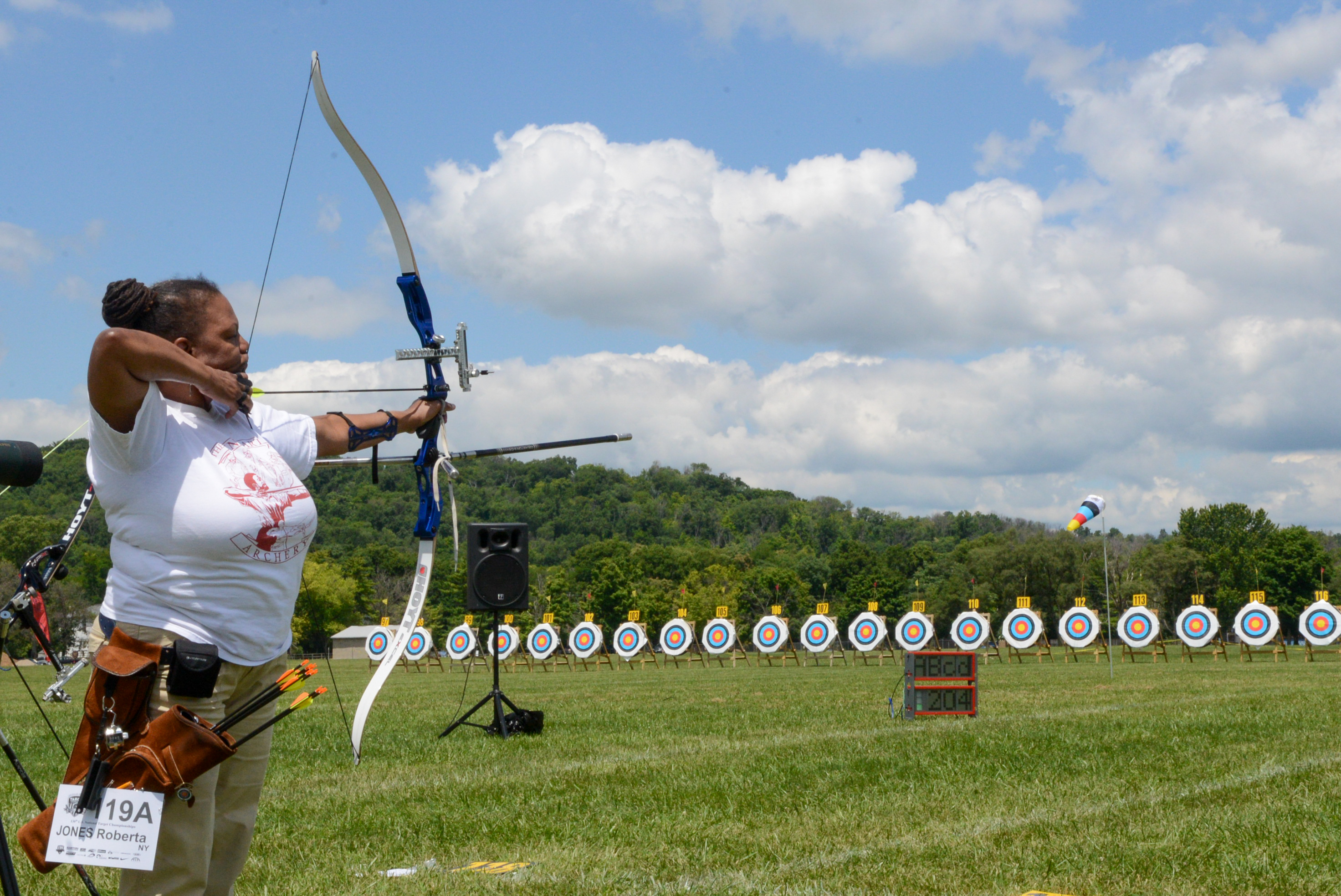
By the time Roberta Jones picked up a bow for the first time, she was well into adulthood. A lifelong New Yorker, a social worker and family therapist by profession, Jones had already spent decades navigating the complexities of people, communities and systems. What she didn’t know then was that archery would become the place where so many parts of her life - mind, body, spirit and service - would finally align.
“I was hooked,” Roberta said simply. “That was it.”
Now 71, Jones is a competitive recurve archer, a USA Archery-certified coach, and a cornerstone of the Center Shot Archers program in New York City. During Black History Month, her story is not just about athletic achievement, but about access, representation and what it means to open doors - especially for young Black girls who may not always see themselves reflected in sport.
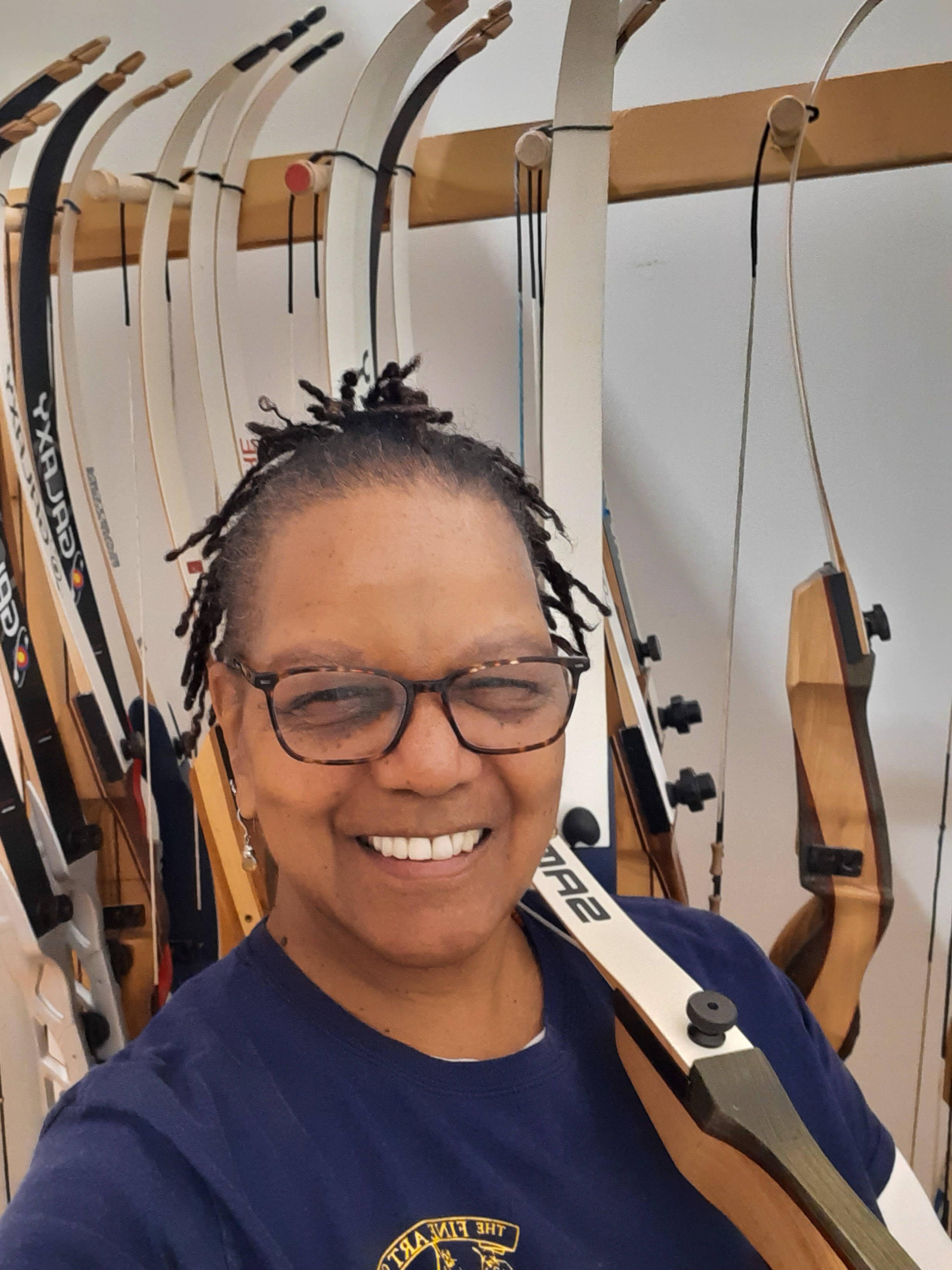
Roberta Jones didn’t grow up with archery. She grew up with older brothers, African and Caribbean dance, volleyball, softball and the kind of physical resilience that comes from holding your own in a big family. Professionally, she chose social work, drawn by what she describes as a “rock-bottom belief that we are all connected.”
By the late 2000s, after years in demanding therapeutic and administrative roles, Roberta was feeling the weight of that work. It was a longtime friend - Coach Larry Brown - who suggested she try archery. At first, she hesitated. Then she tried it.
She was in her mid-50s when she started shooting.
“Archery asks you to do many things at once,” Roberta explained. “Your bow arm is doing one thing, your string arm another, your back muscles are engaged, your head is turned - and in the middle of all that, you have to settle.”
That word – settle - has become central to how Jones teaches and lives archery. Not relaxing or giving up tension but finding steadiness within it.
Like many new archers, Roberta jumped into competition early - too early, by her own admission. “It was terrible,” she laughed.
But archery has a way of teaching patience. Over time, Roberta found her rhythm. She competes in her age category at state and national events, with a podium finish at USA Archery Outdoor Nationals among her highlights. She’s ranked nationally in her division, though she’s quick to note she doesn’t chase rankings.
“What keeps me here is not just competition,” she said. “I love being an archer.”
That love extends to coaching, where her impact arguably reaches even further.
Center Shot Archers, founded by Coach Brown, has spent two decades bringing archery into New York City schools and community centers, particularly in neighborhoods where the sport has not traditionally been accessible. Roberta has been part of that work from near the beginning, helping build a program rooted in high expectations, safety, and care.
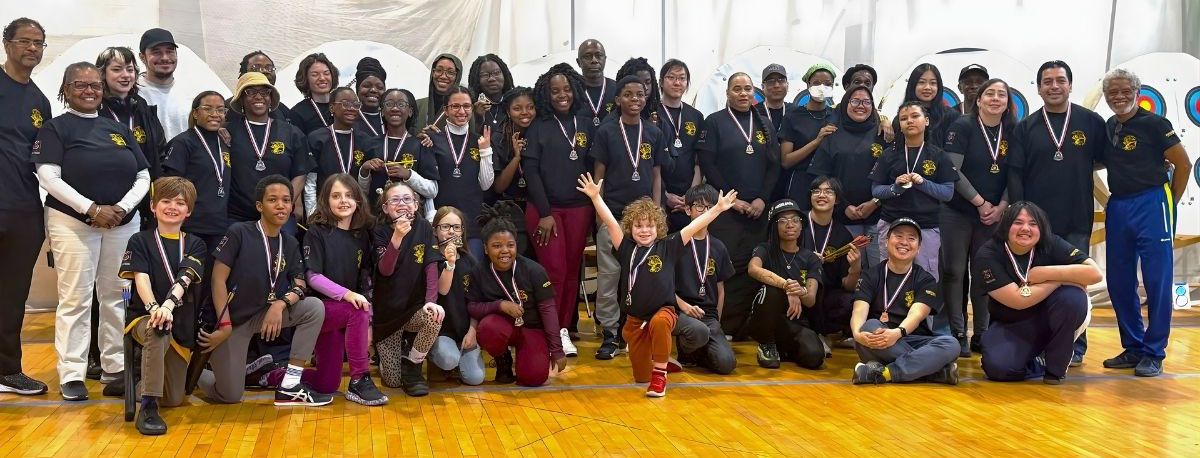
Children as young as eight participate, alongside teens and adults. Over the years, the program has welcomed archers with ADHD, autism, visual impairments, spinal cord injuries, and a wide range of backgrounds and identities.
“Anybody’s body can be taught to shoot a bow,” Roberta said. “That matters.”
Academics come first. Safety is non-negotiable. Progress is expected, but perfection is not. What Center Shot emphasizes is persistence - the ability to keep working at something that doesn’t come easily.
That philosophy comes directly from Jones’ background in social work, though she’s careful to draw boundaries. “I’m not their therapist,” she said. “But I know how to spot an unhappy kid. I know how to deal with frustration, with pouting, with disappointment.”
The USA Archery membership includes 27% persons of color, though as a Black woman coaching and competing in archery, Roberta is acutely aware of how rare her presence can be. Her visibility is intentional. During Black History Month, that intention takes on added resonance. For Jones, representation isn’t about symbolism - it’s about invitation.
“We want young Black and Brown kids to see this as an option,” she said. “Something other than what they’re told is available to them.”
For girls in particular, that visibility can be powerful. While many sports see steep drop-offs in female participation during adolescence, Center Shot has found that teen girls often stay - and sometimes outnumber the boys.
“They’re surprised when they see me shoot,” Roberta said with a smile. “They know me as the coach, the organizer. Then I step up to the line, and suddenly it clicks.”
That moment - seeing someone who looks like you doing the thing - is often where possibility begins.
Roberta often describes archery as a rare equalizer. At a tournament, it doesn’t matter where you’re from, what you do for a living, or how different your lives might be.
“There’s this bond,” she said. “We step onto the same line, and archery is the common ground.”
It’s also a sport people can come to at any stage of life. Roberta herself is proof of that. She’s seen children grow into adults, adults return to the sport years later, and first-time archers in their 70s check something off a bucket list.
“You can get on and off at different points,” she said. “The joy is still there.”
 This year marks the 20th anniversary of the Battle of the Boroughs, a youth tournament that grew out of friendly competition between schools in Brooklyn and the Bronx. What began as a simple local event has become a tradition - one that brings together current youth archers and alumni alike. This year’s anniversary event takes place in Brooklyn on February 28.
Some of those early Battle of the Boroughs participants are now teachers, coaches, scientists, parents. Many credit archery with teaching them grit - the understanding that hard things take time, and that effort matters.
“That lesson stays,” Roberta said. “It shows up everywhere else in life.”
Roberta spends most of her time now coaching, organizing and mentoring, though she still shoots several times a week and competes a handful of times each year. She has no intention of stepping away from the line.
“I could advocate for this sport without shooting,” she said. “But I don’t want to. I want to shoot.”
During Black History Month, Roberta Jones’ story is a reminder that progress doesn’t always come from grand gestures. Sometimes it comes from showing up - week after week, year after year - and creating space where people can see themselves, try something new, and learn how to settle into who they are becoming.
Archery, for Roberta, is more than a sport.
“It’s a thing to do in life,” she said. “And it’s one I’ve chosen.”
At USA Archery, we believe our sport is strongest when everyone has a place on the line. We’re committed to growing diversity in our community, addressing inequities, and expanding access so that archery is open and welcoming to all. Our goal is simple: to create an environment where every athlete, coach, volunteer and family member feels safe, respected and valued.
We know that it’s our different backgrounds, experiences and perspectives that bring depth and strength to the sport we love - and that richness is something worth celebrating, during Black History Month and every month.
< Back to All News