When Katherine P. Wu was seven, she folded paper cranes for hours at a time. Her mother had been diagnosed with breast cancer, and Katherine had heard the old legend: fold a thousand cranes, make a wish, and maybe that wish would come true. She folded at home and in class, often under the desk at school. When she reached one thousand cranes, she gave them to her mother with the only wish that mattered at the time.
“I wished for her to stay in my life,” Katherine said. “And she did.”
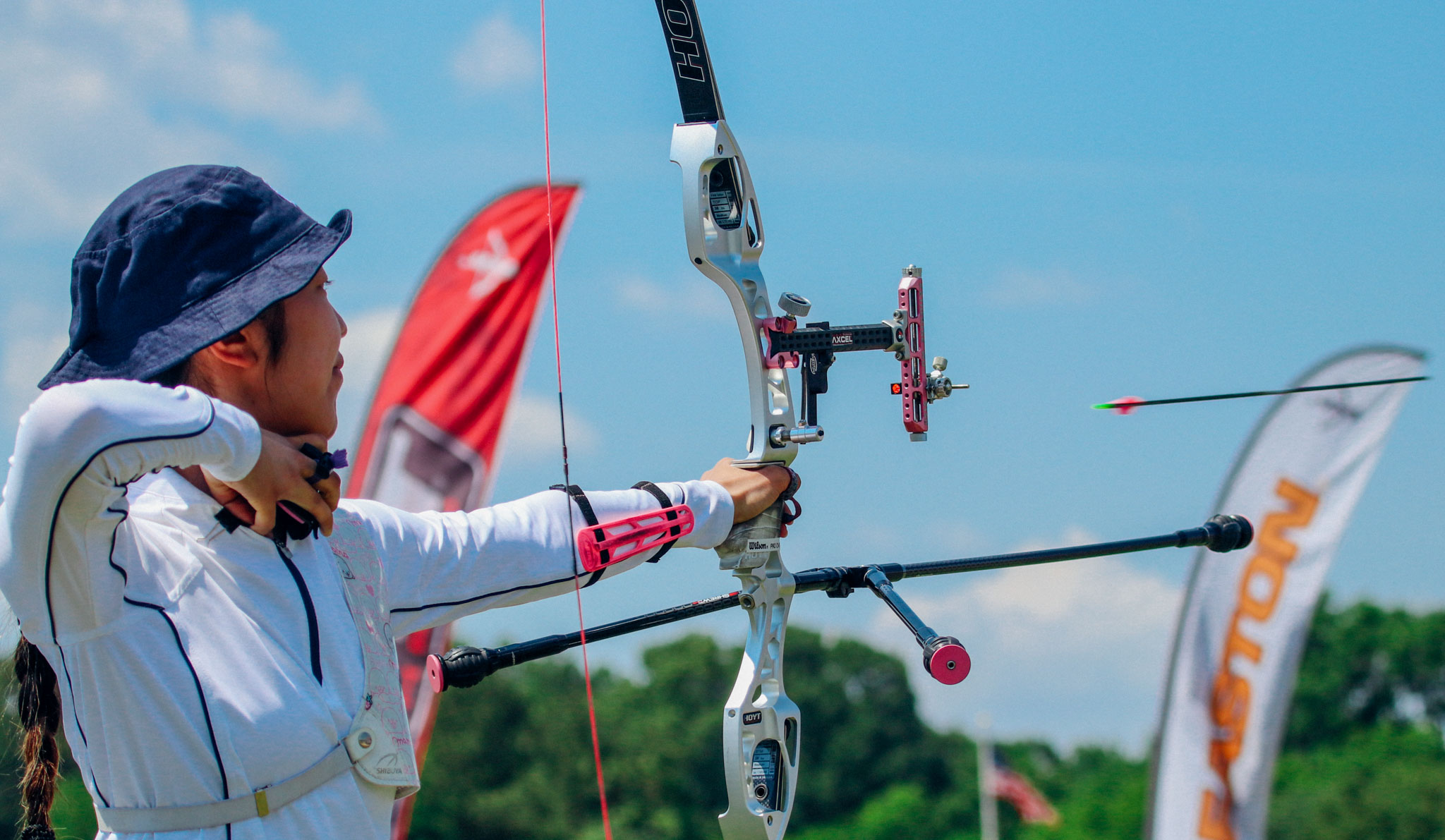
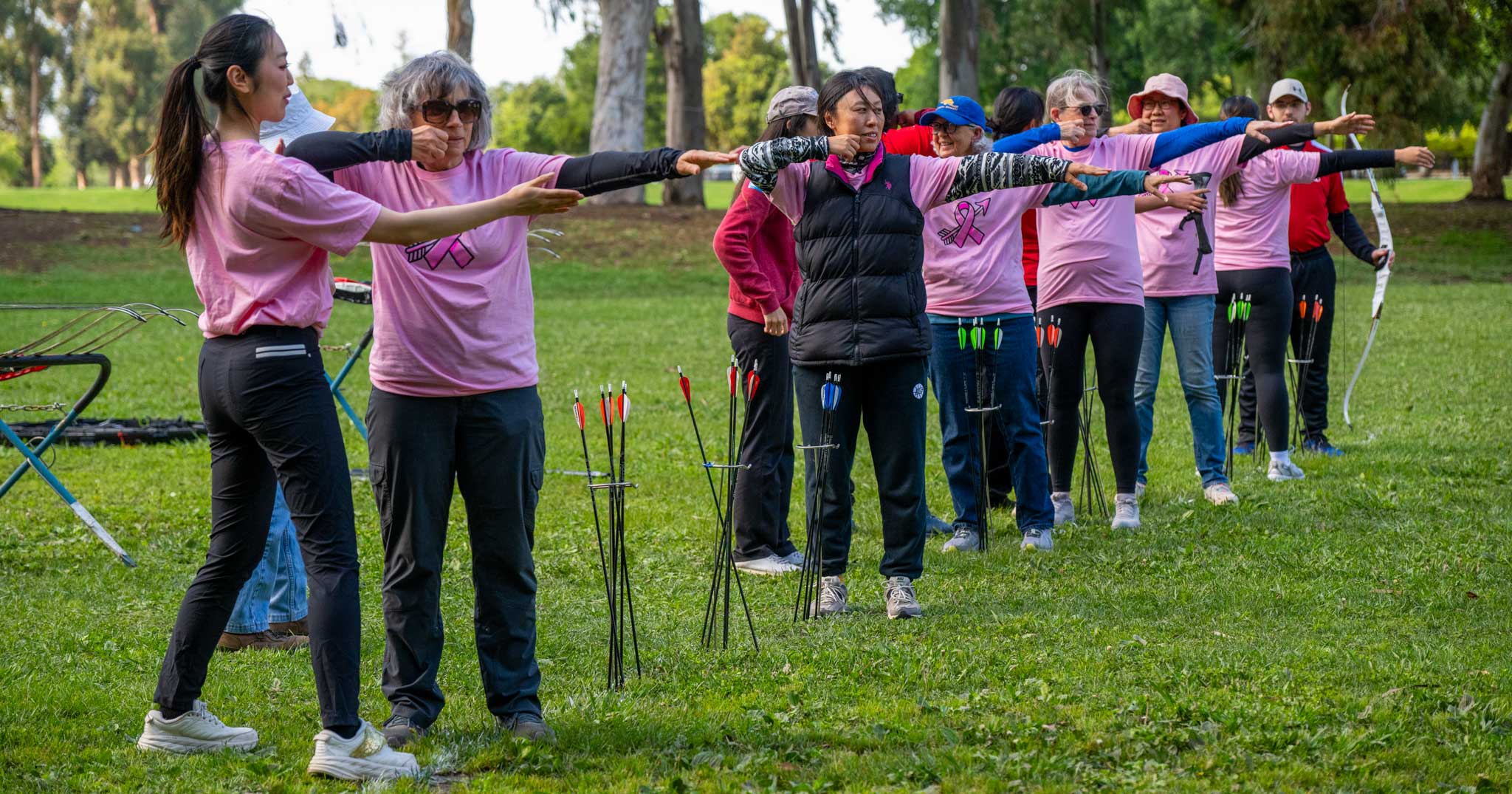
Katherine, a Team USA archer, four-time All-American and Stanford Law student, is the force behind Archery Rx, a Stanford pilot program exploring archery as a low-impact rehabilitation activity for breast cancer survivors. The project is personal, shaped by a family history of cancer and strengthened by her belief that repetition, trust and community can change what a body believes it can do.
“The end goal has always just been to help other people heal,” 26-year-old Katherine added. “I believe that one day doctors might prescribe sports the way they do medicine, and archery is the first test case for that.”
 The idea grew after Katherine saw reports from abroad, including World Archery’s coverage of Flechas de Vida - “Arrows of Life” - a free rehabilitation program in Uruguay for mastectomy patients. “I thought, huh, why has the U.S. not done this before?” Katherine explained. “And so I sought out to do the first U.S. pilot program where we actually took measurements to test: Is this really true?”
At Stanford, everything she needed was already on campus: oncology expertise, an archery field, and a college team full of volunteers. Katherine connected Stanford Medical Center’s oncology department with the Stanford Archery Team, and the concept moved quickly from possibility to practice.
Participants range widely - one as young as 25, another 72. Some live nearby; one drove roughly two hours. The program is not about treating people as patients. It is about giving survivors a place where recovery can feel active and social.
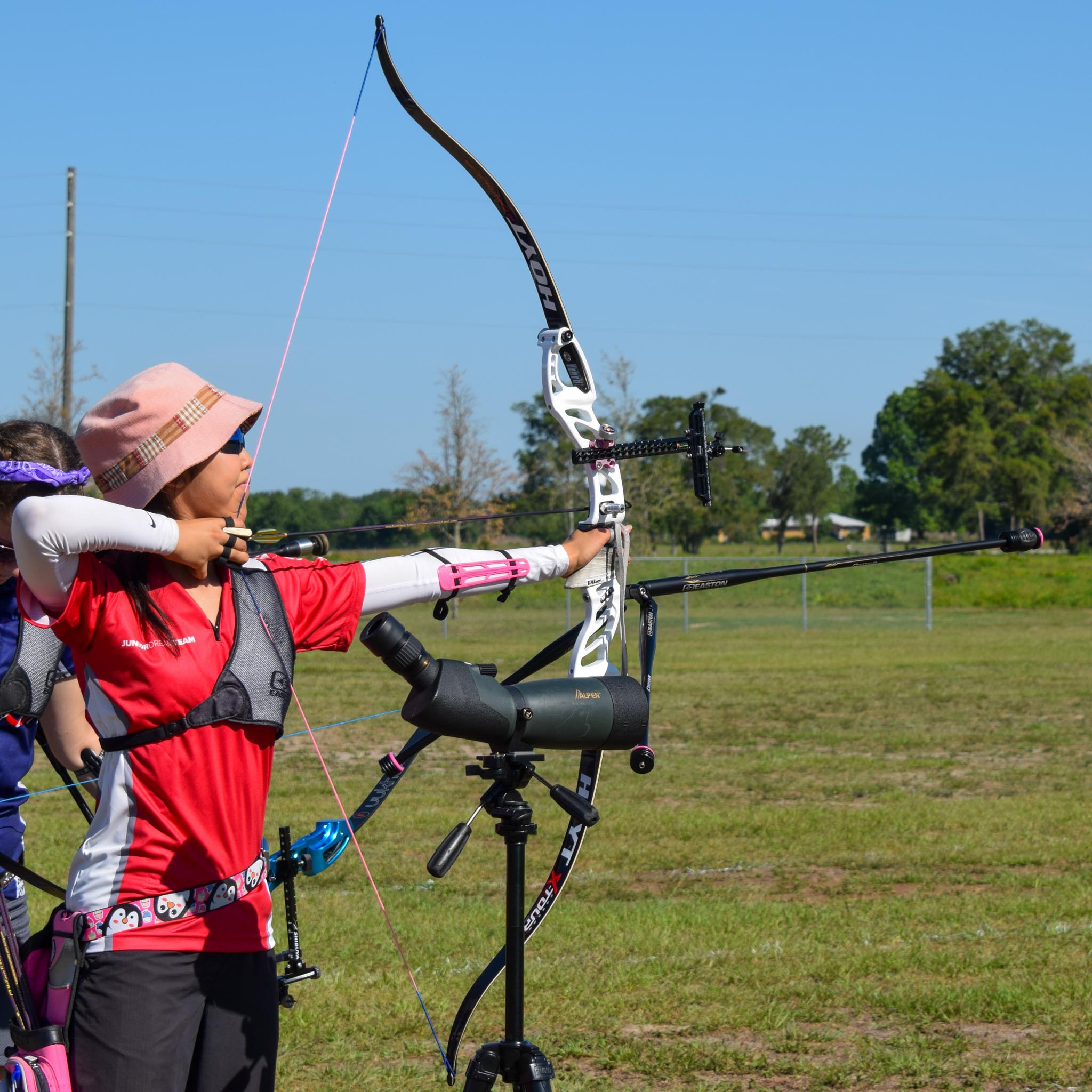
Early concerns were practical. All participants had to have completed treatment, physical therapy, and be cleared by their physician to participate in this program. Katherine’s competition bow is about 40 pounds; Archery Rx uses much lighter bows, generally between 12 and 18 pounds, with one-on-one coaching from Stanford archers. As survivors rebuilt their strength, Katherine sought to make the activity as fun as possible by including balloons in one session, and 3D animal foam targets in another.
That trust in their own abilities, Katherine says, is returning. Survivors have told her they feel stronger and more confident. One participant called it “a program I didn’t know I needed.”
 Like with so many, cancer has never been too far from Katherine’s life. Her mother’s diagnosis came when Katherine was a child. Her aunt died recently of lung cancer. Katherine also speaks plainly about her inheritance of BRCA, a genetic mutation that can increase cancer risk. Just last year, at 25 years old, she had her first biopsy for a suspicious tumor, which thankfully turned out to be benign. Archery Rx is a way of bringing her own story, her family’s story and her sport’s culture into the same frame.
“It’s a really feel-good program,” she said. “And I just love that archery has given me a community that I can also give back to.”
That community has been the consistent in Katherine’s life since she was 13, when The Hunger Games convinced her that archery looked like a sport worth pursuing. Katherine is the daughter of two accomplished athletes, her father a swimmer at Stanford, and her mother the volleyball captain at MIT. They started her in swimming, but the water was always too cold. Her dad gave her a choice: pick another sport or keep swimming. Katherine chose archery, even skipping part of her best friend’s birthday party for chance at that first lesson!
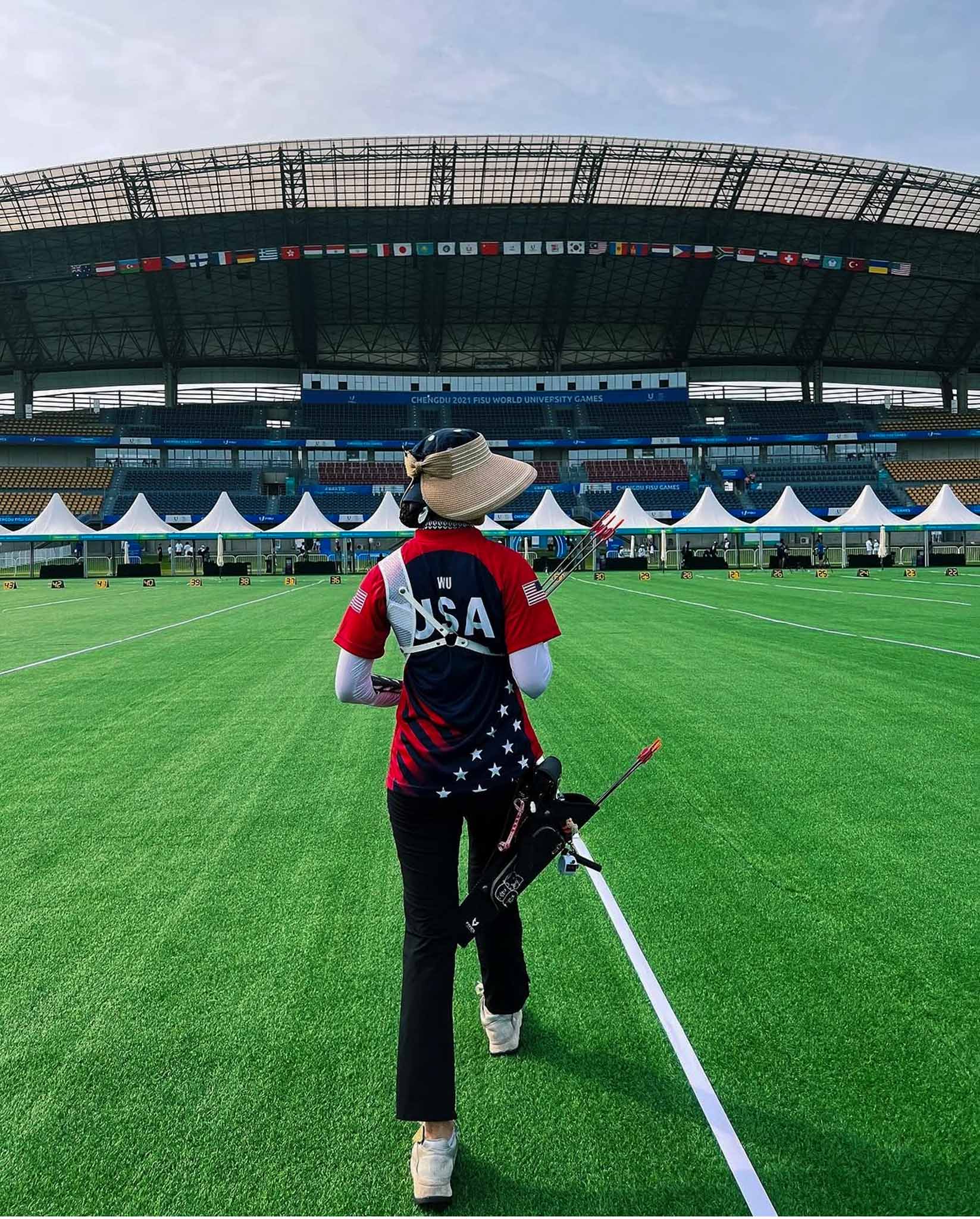
What followed has been a life organized around the shooting line. Katherine debuted for Team USA as a teenager, won mixed team gold and individual bronze at the 2018 Pan American Championships, and represented Team USA at international events including the Hyundai Archery World Cup in Guatemala City and the FISU World University Games in Chengdu, China. At Rice University in Houston, Texas – where she studied neuroscience – she earned All-American and Academic All-American honors four years running.
Rice did not have an archery team when she arrived, so Katherine created one. She petitioned to set up a target on the intramural fields, registered a team with USA Archery, and trained as a one-person team, often rising before class to beat the Texas heat.
That self-accountability now shows up in all areas of her life. Katherine is completing her Juris Doctor at Stanford Law School, serves on the Board of USA Archery, and has been appointed as an arbitrator for the U.S. Olympic and Paralympic Committee. She is, by several measures, among the youngest people doing this work.
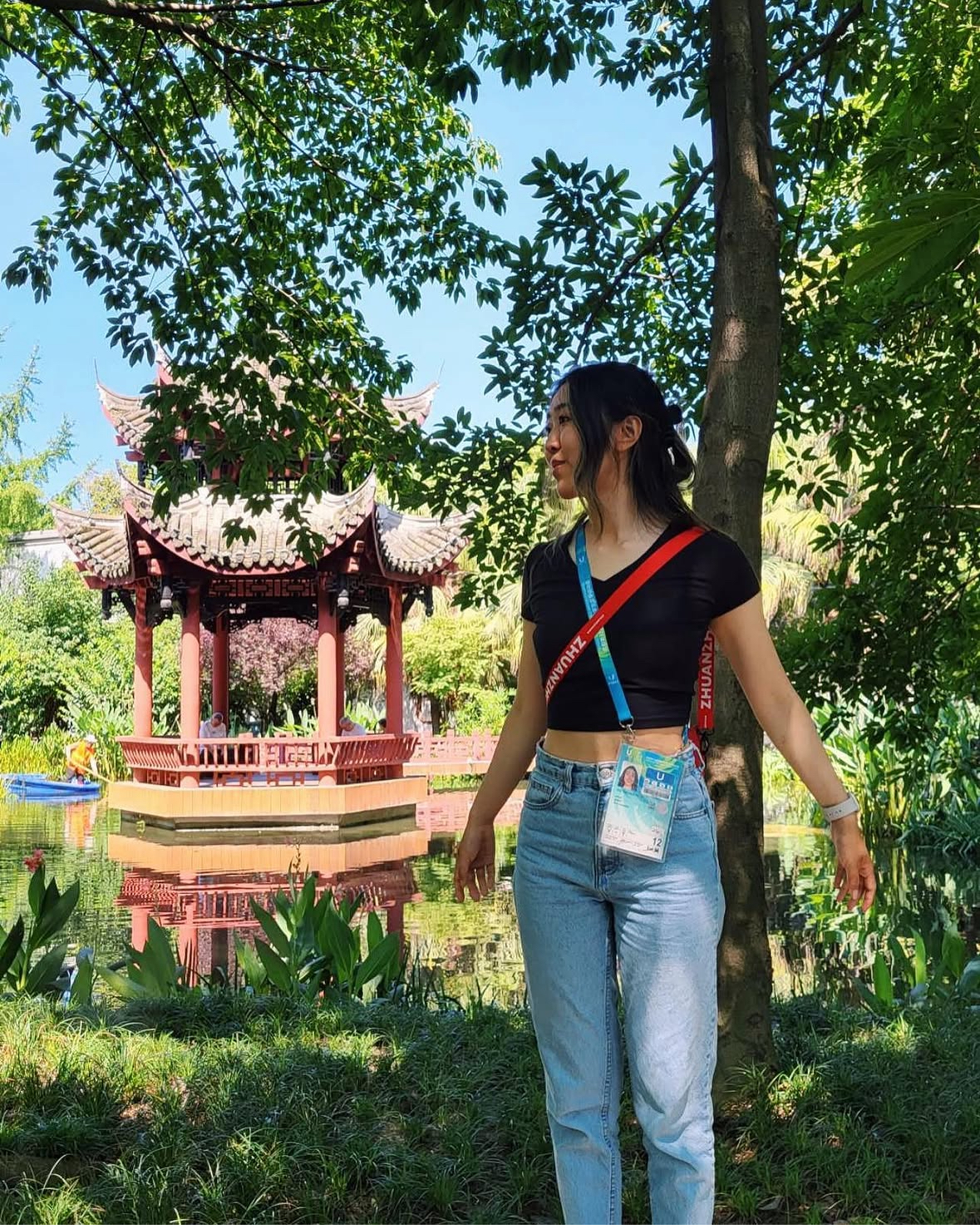 When asked how she makes time for it all, “I believe you make time for the things that matter to you,” she said. “Archery has always been a break from my studies, and vice versa.”
Before law school, Katherine traveled abroad through the Stephen A. Zeff fellowship to study archery cultures around the world, including long training sessions in China and Korea. What she brought back was proof that archery’s language is universal. “Archery cultures across the world are so different, but yet they’re all fundamentally the same,” she said.
Archery Rx brings that same spirit to a different kind of line. The targets are not medals or rankings. They are confidence, mobility, companionship and the quiet satisfaction of doing something that once seemed uncertain. When asked what makes archery uniquely effective, “I think it’s two things,” Katherine commented. “The first one is physical. It’s good to find a low-impact way to move your body, to be outdoors. And the other thing that’s rewarding is the community aspect.”
Still, the most revealing image may be the oldest one: a seven-year-old girl folding cranes under a desk because she wanted her mother to live. Now, she’s rebuilding that wish into a program for breast cancer survivors, transforming archery into a way for people to gather, move, and begin trusting their bodies again.